More Stock Time Isn’t Always the Answer: A Note to Parents and Young Rodeo Athletes
What if the answer to a young rodeo athlete’s struggles is not another ride?
There is absolutely a time when a green athlete needs more stock time. They need to see different animals, feel different situations, learn timing, and become more comfortable competing under pressure.
Experience matters.
But every ride is also a physical stressor. If an athlete is already tired, beat up, moving poorly, or physically unable to hold the positions their event requires, adding more stock does not automatically fix the problem.
Sometimes it simply gives them more opportunities to practice the same mistake.
That is the red flag parents and young athletes need to recognize. More exposure can be valuable, but more is not always development.
Are you adding experience: or repeating the same problem?
Stock time is practice.
Practice is important, but practice only works when the athlete has enough physical capacity to perform the skill correctly.
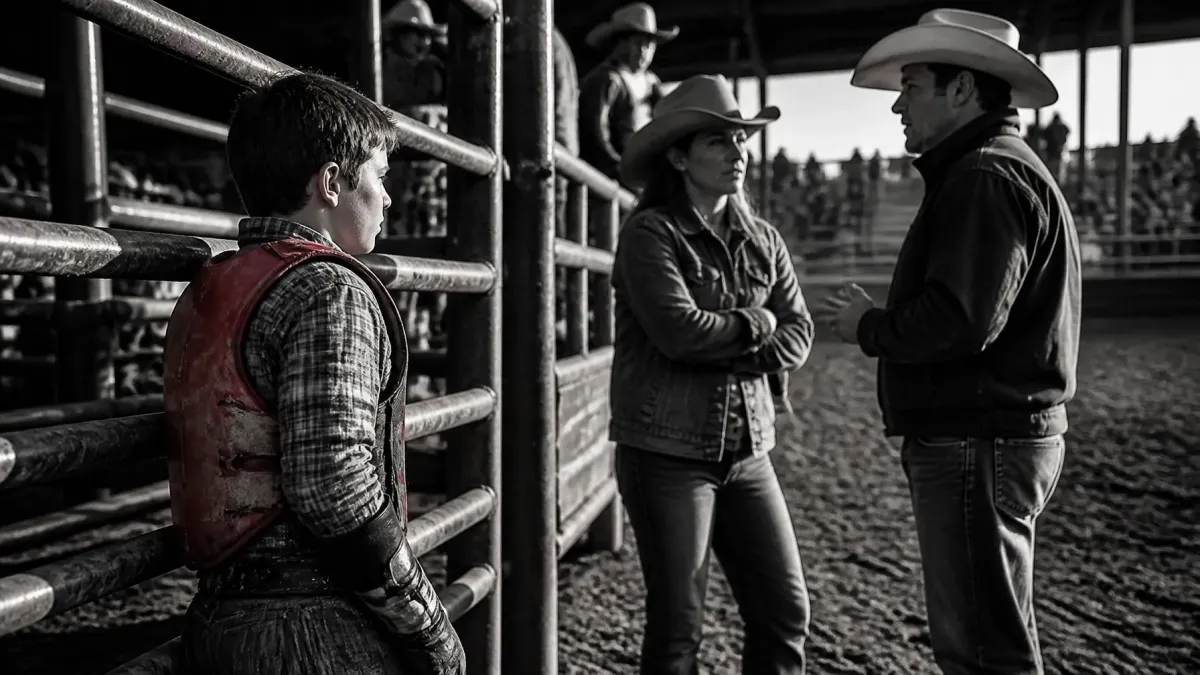
If a young bull rider keeps getting pulled over their riding hand, is the answer always five more bulls?
Maybe the athlete needs more experience. Maybe their timing is off. Maybe they are reacting late to the jump or failing to stay connected through the ride.
But there may also be a physical limitation underneath the technical error.
They may lack the trunk strength to resist rotation. Their hips may not be stable enough to maintain position. Their upper back, grip, or lower body may fatigue before the ride is over.
If the athlete cannot physically hold the position, more attempts may only reinforce the breakdown.
The same question applies to a young bareback rider who loses position late in the ride.
Do they need more horses?
Possibly. But if the athlete can maintain position for the first few seconds and then falls apart as fatigue builds, the weakest link may be strength and conditioning rather than a lack of opportunity.
More horses may expose the problem.
They may not solve it.
Every ride has a cost
Parents often see stock time as the only meaningful form of preparation. Young athletes can fall into the same mindset. If the goal is to get better at rodeo, the assumption becomes simple: ride more.
But a ride places demand on the athlete’s spine, hips, shoulders, elbows, wrists, grip, trunk, and nervous system.
The athlete has to absorb force, stabilize against movement, react quickly, and produce effort while maintaining a precise position. That is not just technical practice. It is a high-intensity physical event.
The total workload also includes travel, school, lifting, conditioning, chores, sleep, competition stress, and the normal demands of growing.
A young athlete who looks fine walking into practice may still be carrying fatigue from the previous several days.
That is why soreness, poor sleep, irritability, declining performance, reduced enthusiasm, and nagging joint pain should be treated as red flags: not signs that the athlete needs to toughen up and do more.
When fatigue changes movement quality, the athlete is no longer practicing at their best. They may be rehearsing compensation, poor positions, and habits that become harder to correct later.
Find the actual limiting factor
Before automatically adding more exposure, figure out what is actually holding the athlete back.
If the problem is technique, the athlete probably needs more quality practice and better coaching. That may mean fewer attempts with more attention to setup, timing, body position, and a specific correction.
If the problem is strength, train it.
A bull rider who cannot resist rotation needs a stronger trunk and better control through the hips and shoulders. A bareback rider who loses position under fatigue needs the strength and capacity to maintain that position when the event gets difficult.
Strength training does not replace stock time. It gives stock time a better foundation.
If the problem is mobility, address it.
Limited hip, ankle, or thoracic mobility can make it difficult for an athlete to get into the positions their event demands. When a joint cannot move well, another area often has to compensate. That compensation may show up as a hip that feels “stuck,” a back that gets tight, or a position that feels off from the beginning of the ride.
Mobility work should be specific to the athlete’s needs, not a random collection of stretches.
If the problem is conditioning, build it.
Some athletes have the skill to perform early in a ride but cannot maintain it late. That is a capacity issue. The athlete needs to develop the ability to repeat high-quality efforts, recover between sessions, and continue producing force when fatigue begins to build.
Conditioning should support the event, not leave the athlete so exhausted that every practice becomes another hard day.
If the problem is confidence and experience, more appropriate exposure may be exactly what the athlete needs.
A green athlete may need controlled opportunities to see different stock, compete in new environments, and learn that an uncomfortable situation does not automatically become a disaster.
But the exposure should be managed. More rides should come with a purpose, a coaching point, and enough recovery to allow the athlete to learn from the experience.
Pain and fatigue change the conversation
When an athlete is sore, under-recovered, or dealing with pain, “more” is not automatically a sign of commitment.
It may be the wrong dose.
Pain that is sharp, worsening, persistent, or affecting movement should not be ignored. A young athlete should communicate it to a parent and coach, and the appropriate medical professional should be involved when necessary.
The goal is not to create fear around training or competition. The goal is to separate productive discomfort from a warning sign.
Muscles can feel tired after a challenging session. An athlete can be uncomfortable while learning a new movement. But a nagging joint, recurring pain, altered mechanics, or a symptom that gets worse with each ride deserves attention.
Adding more stock on top of an existing problem can dig the hole deeper.
That may lead to missed practices, lost confidence, and a longer road back than if the issue had been addressed early.
A better way to plan practice
Parents and coaches do not need a complicated laboratory to make better decisions. They need to pay attention and ask better questions.
Before practice, ask the athlete how they slept, how they feel, and whether anything hurts. Pay attention to how they warm up, move, mount, grip, and respond to coaching.
During practice, look for a drop in position, timing, effort, or focus. If the athlete’s quality is falling apart, more attempts may not be productive.
After practice, consider whether the athlete is recovering normally. Can they move well the next day? Are they excited to train again, or are they dragging themselves through every session?
A simple training log can help. Record the date, event, stock time, strength and conditioning work, soreness, sleep, and any pain. Patterns become easier to see when they are written down.
You can also use a basic readiness scale. Have the athlete rate their energy and soreness before practice from one to five. It does not need to be perfect. It just needs to create a conversation before the next hard effort.
Young athletes should also have at least some true recovery built into the week. Strength and conditioning sessions, rodeo practices, and competitions all count toward the total stress load. Training plans should account for the athlete’s age, maturity, experience, schedule, and ability to recover.
A qualified coach can help connect the dots through individualized Champion Living coaching, the Optimal Performance Academy, or the educational resources available through the HooeyFit app.
Build the athlete who can handle more
The goal with a young athlete should not be to see how much stock time you can pile on them.
The goal is to develop an athlete who can handle more stock time, recover from it, learn from it, and continue progressing.
That requires more than event-specific exposure.
It requires quality coaching, physical preparation, strength, mobility, conditioning, confidence, sleep, nutrition, and patience. It requires parents who understand that long-term development may not always look like doing more today.
Sometimes the best decision is to reduce the number of attempts and improve the quality of each one.
Sometimes it is to leave the arena and train the physical quality that is limiting the athlete.
Sometimes it is to give the athlete a full day to recover so they can return ready to learn instead of simply surviving another session.
More stock time can be a powerful tool.
It is not the entire toolbox.
More is not always development. The right dose, at the right time, for the right athlete is development.
Start by identifying the weakest link. Then address it with intention, give the athlete time to adapt, and build from there.
That is how you create a rodeo athlete who is not only ready for the next ride, but prepared for a long and successful career.
Shop the Champion Living x Hooey collection and start training with the HooeyFit app, available in Apple Apps Store and Google Play Store!